
2025: Myths and Games of the Global Market – From AI Bubble to Energy Resilience, from Storage Disaster to New Growth Hotspots
Keywords: AI trading slump, energy crisis, storage cost, nuclear loan, smart glasses, Korea stock market, yen exchange rate, prediction market
Introduction
In the last week of June 2025, global financial markets and the tech industry presented an unprecedented complex picture. From the sudden plunge in US stock AI trading to the resilience test of the Middle East energy crisis; from the "storage disaster" in game hardware pricing to the emergence of Abu Dhabi's $50 billion AI investment tool – these seemingly isolated events together outline an era full of contradictions and opportunities. The short-sightedness of markets and long-term strategic layout, the stability of traditional energy and the rise of new energy, the surge in consumer electronics costs and the affordability of AI hardware are intertwining in unprecedented ways, reshaping the underlying logic of the global economy and investment.
1. The "Sword of Damocles" of AI Trading: Doubts and Corrections Under High Valuations
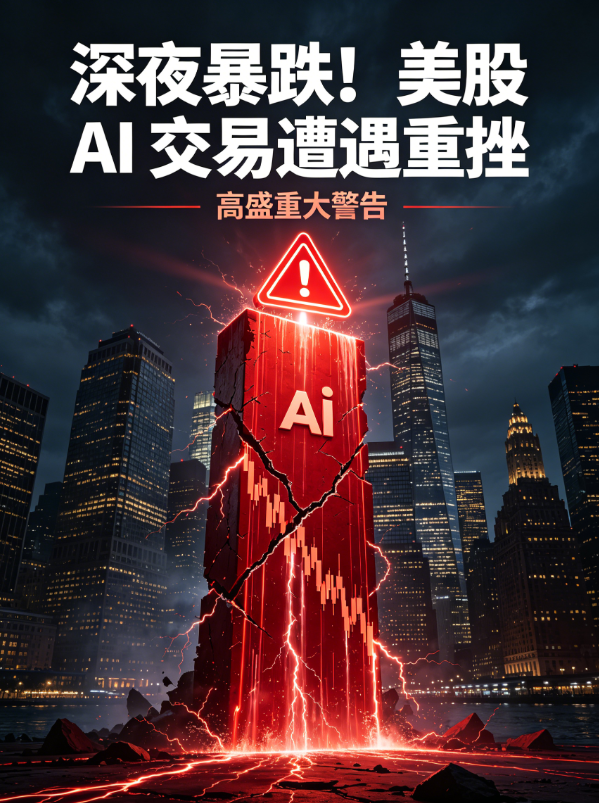
Late-night plunge, US stock AI trading suffered a heavy blow, Goldman Sachs' major warning struck like a thunderclap. Analysts pointed out that the high valuations of AI-related stocks have begun to deeply unsettle investors. The market is questioning whether hyperscale cloud companies like Google can justify their massive AI investments. When technical narratives meet financial reporting reality, when market sentiment shifts from frenzy to rationality, investors have to face a fundamental question: Is the commercialization path of the AI industry as clear as expected? This correction may not be the end, but the beginning of a healthier, more rational development.
2. Resilience Test of the Energy Market: US Economic Transformation from Dallas Fed Research
The latest research from the Dallas Fed reveals a thought-provoking phenomenon: international oil prices once surged to $120 per barrel this spring, but US economic output only decreased by about 0.3 percentage points. Compared to the period in the 1980s when the US was heavily dependent on oil imports, this shock loss was only a small fraction. This is not only a victory of energy independence policy, but also an inevitable result of economic structure transformation. The shale oil revolution, energy efficiency improvements, and rapid penetration of renewable energy together form the "seismic system" of the US economy. However, the shadow of the Hormuz crisis has not dissipated; every fluctuation in the energy market is another test of global economic resilience.
3. The Cost of "Storage Disaster": Game Industry Cost Dilemma from Steam Machine Pricing
The highly anticipated new hardware Steam Machine in the gaming industry in 2026, under the backdrop of "storage disaster," finally delivered pricing that satisfied neither manufacturers nor consumers. The 512GB base model is priced at $1,049, and the 2TB version is as high as $1,349. Behind this is the harsh reality of continuously soaring global memory chip prices. From PCs to phones, from game consoles to data centers, "storage disaster" has become a common phenomenon across the entire technology industry chain. When "being able to launch is already a miracle" becomes a helpless lament from manufacturers, consumers have to make difficult choices between high performance and high price.
4. The Birth of a Super AI Investment Tool: Strategic Layout of Abu Dhabi's MGX
Abu Dhabi's artificial intelligence investment company MGX has raised nearly $50 billion from regional and global investment institutions to accelerate investment in AI infrastructure and technology. The source of this huge fund includes regional sovereign wealth funds, global pension funds, and large institutional investors. This news contrasts sharply with the heavy blow to US stock AI trading, showing that global capital's long-term confidence in the AI industry has not wavered. Investors are showing with actions that they believe AI is not just a short-term hotspot, but a core variable defining global competitiveness in the next decade.
5. Nuclear Renaissance: $17.5 Billion in Loans and 10 Large Nuclear Reactors
The US Department of Energy announced it will provide a total of $17.5 billion in loan support to utilities and energy companies to accelerate the construction and deployment of 10 large nuclear reactors across the country. Energy Secretary Chris Wright said these loans will help reduce the construction costs of nuclear power projects and advance the project timeline by about three years. Driven by carbon reduction targets and energy security needs, nuclear energy is re-emerging as a core pillar of US energy policy. This decision will not only change the US power structure but also have a profound impact on the global nuclear power market.
6. New Battlefield for Smart Glasses: Meta's $299 Strategy
Meta launched a new series of smart glasses at $299, doubling down on its AI hardware platform. The "Meta Glasses" series, developed in partnership with EssilorLuxottica, starts at just $299, at least $80 cheaper than the entry-level second-generation Meta Ray-Ban smart glasses. Against the backdrop of heavy losses in AI trading, Meta's move seems particularly bold. This is not just an extension of the product line, but a firm confidence in bringing AI to the consumer market. When costs drop significantly, smart glasses may move from a niche product to the mainstream consumer market.
7. FOMO Frenzy in Korea's Stock Market: Rationality and Loss of Individual Investors
This summer, Seoul is somewhat "hot." Mr. Kim, 30, invested 70% of his total assets in stocks, believing that "there may never be such a profit opportunity again." This FOMO (fear of missing out) sentiment is driving major volatility in the Korean stock market. When individual investors bet their entire fortunes on the market, hidden worries may erupt one day. As long as it's not now, this "live in a fool's paradise" investment mentality can still be maintained. But history has repeatedly proven that when irrational exuberance peaks, it is often the eve of a bubble burst.
8. Long-Term Weakness of the Yen: Logic and Lessons of Intervention Failure
On June 23, the yen against the dollar approached its lowest level in nearly 40 years since December 1986, hovering around 161.93 yen per dollar. The market widely believes that the effect of Japanese authorities' intervention in the foreign exchange market is difficult to offset expectations of a widening US-Japan interest rate differential. Against the backdrop of divergent monetary policies and significant differences in economic fundamentals, the long-term weakness of the yen seems to be a foregone conclusion. This is not only a dilemma for the Japanese economy, but also a microcosm of the failure of global monetary policy coordination.
9. The Rise of Prediction Markets: Zuckerberg's New Direction and Transformation of Traffic Giants
As a new growth darling in the US internet field since last year, prediction market platforms have become a big business attracting hundreds of billions of dollars. From NBA championship results to when the US will launch a war, bets on a wide range of topics attract massive funds. Latest reports show that Meta boss Zuckerberg also wants to get a piece of the prediction market. This is not only Meta's diversification attempt, but also a microcosm of traffic giants looking for new growth hotspots against the backdrop of sluggish traditional advertising growth.
Conclusion
In the last week of June 2025, global markets and the tech industry presented a complex picture to investors and entrepreneurs: the correction of high valuations in the AI industry coexists with long-term strategic layout; short-term shocks in the energy market dance with long-term improvement in economic resilience; surging consumer electronics costs alternate with the affordability of AI hardware; failure of monetary policy runs parallel with FOMO frenzy in emerging markets. In this unprecedented change, the only certainty is uncertainty itself. For investors, staying rational, diversifying risk, and focusing on long-term value may be the only correct choice to navigate the cycle.


