
Structural Opportunities in Gold Pullback: Long-term Investment Logic Under De-dollarization Trend
Introduction
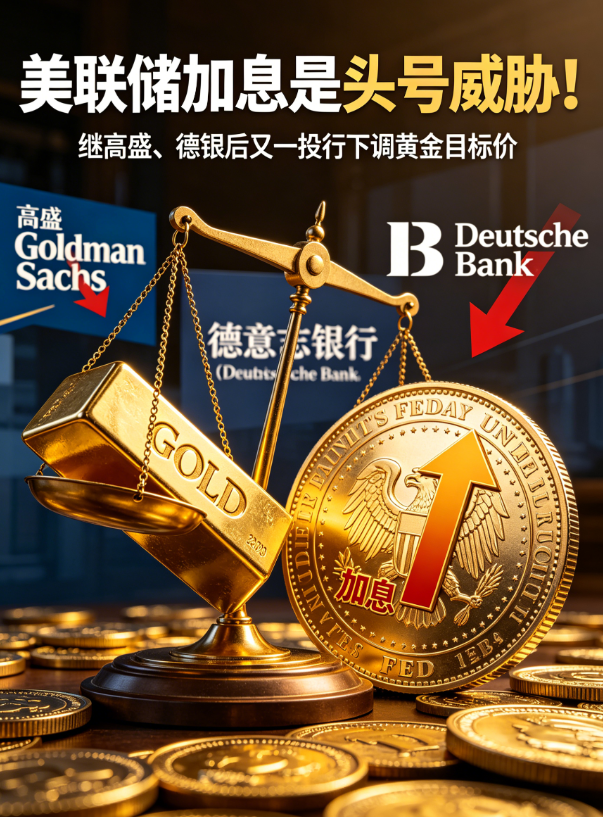
Recently, with the Fed clearly shifting to a hawkish stance, international gold prices have been hovering at low levels, Wall Street banks have successively lowered gold price targets, and market sentiment has turned pessimistic. However, amidst the bearish noise, some sharp investors see a window for long-term positioning. Jerry Prior, CEO of Mount Lucas Management, a hedge fund managing $1.7 billion in assets, stated clearly in an interview that despite short-term headwinds, the recent gold pullback has created an attractive entry point for investors. He emphasized that the core factors driving gold's long-term bull market remain solid, especially the declining status of the US dollar as the world's primary reserve asset, providing structural support for gold.
This article will deeply analyze the opportunities and challenges in the current gold market from four dimensions: short-term selling pressure, de-dollarization trend, inflation and interest rate environment, and investment outlook.
I. Hawkish Turn and Short-term Selling Pressure: Market Sentiment Already Priced In
In recent weeks, gold has faced significant selling pressure, stemming from the market's reaction to Fed Chair Kevin Warsh's more hawkish policy stance and the temporary easing of Middle East conflict concerns. Traders actively adjusted positions, and speculative investors, sovereign wealth funds, and systematic trend-following funds jointly drove the rapid decline in gold prices.
Prior noted that speculative positions have undergone an extreme shift, with most downside risk already priced in. He believes gold may fall further below $4,000 per ounce, but this is more sentiment-driven technical adjustment than fundamental deterioration. Once oil supply recovers and geopolitical risks ease, central banks will resume buying gold to rebuild reserves, and then gold prices are expected to stabilize and rebound.
Historical experience shows that when the market collectively digests negative factors, it is often a good opportunity for long-term funds to buy on dips. The current repricing of gold is an overreaction to short-term noise, not a reversal of the long-term trend.
II. De-dollarization: The Structural Pillar of Gold Bull Market
If short-term selling pressure is noise, the long-term de-dollarization trend is the intrinsic engine for gold's rise. Prior described the "weaponization of the dollar" as the main catalyst for central bank gold purchases. In recent years, the US has frequently used the dollar's dominant position in the global financial system to impose financial sanctions, forcing many countries to reconsider their reliance on dollar assets.
Against this backdrop, global central banks have launched an unprecedented wave of gold buying. Countries increasingly want to reduce dependence on dollar-denominated assets through reserve diversification. Whether it's emerging market nations or traditional allies, they are seeking stores of value outside the US dollar and US Treasury market. Prior specifically pointed out that if Middle East oil production increases and revenue flows back, these funds are unlikely to rush into the US Treasury market but will instead turn to the gold market.
This structural change is irreversible. Once countries begin to build reserve asset portfolios independent of the dollar system, gold, as a non-sovereign, credit-risk-free hard currency, will benefit from this trend in the long term. In the long run, de-dollarization not only supports gold's monetary properties but also provides a solid demand foundation for its price.
III. Inflation, Interest Rates, and Gold's Defensive Properties: Short-term Noise Cannot Mask Long-term Logic
Although Prior is long-term bullish on gold, he acknowledges that investors may face greater volatility in the short term. Rising interest rates and stable inflation expectations will put some pressure on gold. Especially during high inflation periods, gold's performance is not always good because rising interest rates increase the opportunity cost of holding non-yielding assets, prompting capital to flow into interest-bearing assets.
However, Prior emphasizes that investors should focus on larger structural themes rather than short-term interest rate fluctuations. He further notes that the current macroeconomic environment is undergoing fundamental changes—reshoring manufacturing and supply chain restructuring are reversing the deflationary trend driven by globalization over the past decades. This means future inflation rates will be structurally higher than pre-pandemic levels, not as persistently low as in the past two decades.
Against this backdrop, gold's strategic value as a defensive asset in a portfolio is even more prominent. Prior pointed out that the retail capital that previously flowed into the gold market has largely been cleared out, meaning the risk of panic selling has greatly diminished. Market participants are more rational, providing a healthier environment for long-term capital to build positions.
IV. Investment Outlook: Year-End Target $4,500 and Entry Window
Looking to year-end, Prior gave a clear expectation: with the re-emergence of central bank demand and the structural de-dollarization trend continuing to support precious metals investment inflows, he expects gold prices to climb to around $4,500 per ounce. This target price is far above current levels, implying considerable upside.
Prior emphasized that the structural de-dollarization trend combined with increased Middle East oil production will attract buyers back. He believes gold prices will rise from current lows, and the current decline is a "reset within a larger long-term uptrend," not the beginning of a long-term bear market.
For investors, the current pullback provides a rare entry window. Although short-term volatility may persist, gold's fundamental support is solid in the long run. Those who can stay calm during market panic and focus on structural trends are likely to achieve considerable returns in the future.
Conclusion
Overall, the short-term negatives facing gold—such as hawkish policy pressure and easing Middle East tensions—have been fully priced in, with limited downside. The true determinant of gold's long-term trajectory is the irreversible structural trend of de-dollarization. Factors such as central bank gold buying, geopolitical risks, and supply chain restructuring collectively drive the return of gold's monetary properties, providing solid support for gold prices.
Investors should ignore short-term "noise" and focus on long-term logic. The recent gold pullback is not the end of the bull market but the starting point of a new upward cycle. In an era of structurally high inflation and challenged dollar credit, gold's strategic allocation value as an important complement to global reserve assets is being rediscovered. For forward-looking investors, now is the best time to "be greedy when others are fearful."


