Kioxia and Samsung Electronics May List in the US: A Signal of Reshaping Global Semiconductor Landscape
Introduction
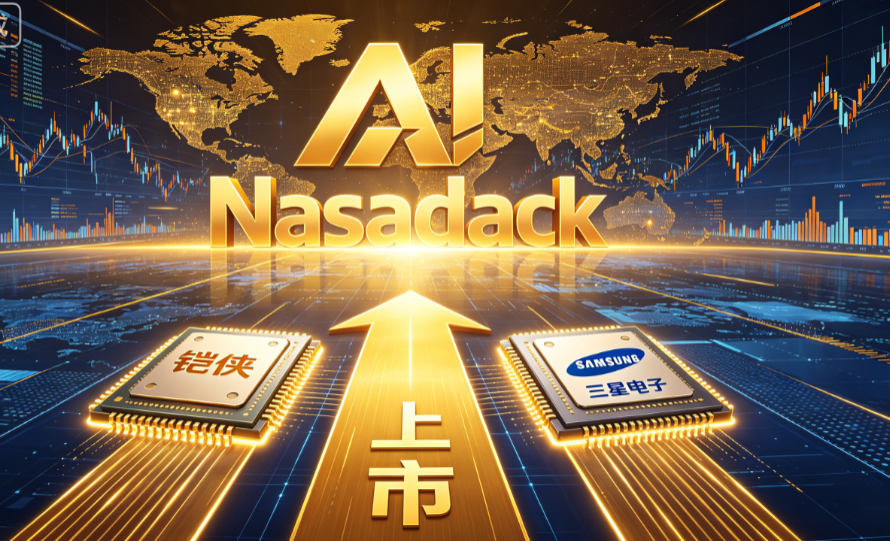
Recently, the market has heard news that Japanese memory chip giant Kioxia and Korean semiconductor leader Samsung Electronics may choose to list in the US, drawing widespread attention from global capital markets and the semiconductor industry. This move not only reflects profound changes in the competitive landscape of the global semiconductor industry but also marks an important step in the US's efforts to attract top tech companies for capitalization. Against the backdrop of surging demand for storage and logic chips from emerging technologies such as AI, data centers, and 5G, the potential US listing of Kioxia and Samsung may reshape the global semiconductor investment and financing ecosystem and have a deep impact on the future industry structure.
1. Motivations for US Listing: Triple Drive of Capital, Market, and Strategy
1.1 Seeking Broader Financing Platform and Valuation Upgrade
The US capital market, with its depth, liquidity, and preference for tech valuations, has long attracted top global companies. For Kioxia, its valuation in Japan may be limited by market size, while the US market often assigns higher valuations to semiconductor companies, especially considering the explosive growth in AI chip demand. Although Samsung Electronics is already a giant in the Korean stock market, listing in the US can diversify its overly concentrated shareholder structure and gain a broader base of international investors, thereby enhancing its global capital allocation efficiency.
1.2 Responding to the "Ripple Effect" of the US CHIPS Act
The US CHIPS and Science Act provides huge subsidies to attract semiconductor manufacturing back to the US, but its conditions (such as restrictions on expansion in China) force global chip companies to make strategic deployments in the US. If Kioxia and Samsung choose to list in the US, they can not only obtain dollar funding but also strengthen their supply chain compliance in the US, paving the way for US policy and customer trust. This is essentially a strategic choice of "capital for market."
1.3 Avoiding Geopolitical Risks and Supply Chain Decoupling Pressure
The technology rivalry between China and the US continues to escalate, and semiconductor companies in Japan and Korea face the dilemma of "choosing sides." By listing in the US, Kioxia and Samsung can embed their corporate governance and operations more deeply into the US financial system, thereby hedging against uncertainty from US regulation. Moreover, increased information transparency and compliance requirements after listing help reduce the risk of being sanctioned or placed on an entity list by the US.
2. Impact on Global Semiconductor Industry: Intensified Competition and Ecosystem Reshaping
2.1 Accelerated "Siphoning Effect" of US Capital Market
If Kioxia and Samsung successfully list in the US, it will encourage more Asian semiconductor giants (such as TSMC and SK Hynix) to consider or accelerate US listings, creating a "snowball effect." This may lead to a "hollowing out" of semiconductor sectors in Asian local capital markets, weakening the funding leverage of Japanese and Korean governments in supporting local chip industries. The US, through its capital market, will further consolidate its position as a global semiconductor capital hub.
2.2 Potential Changes in Memory Chip Competitive Landscape
Kioxia is a major global NAND flash supplier, and Samsung Electronics holds a leading position in both NAND and DRAM. If both companies list on US stock exchanges, the possibility of their merger or cross-shareholding increases, and may even trigger a new wave of industry M&A. For example, US private equity funds have repeatedly attempted to acquire Kioxia; after listing, its equity structure will be easier to manipulate, thus changing the oligopolistic pattern of the memory market.
2.3 The "Middle Path" in US-China Technology Game Becomes More Complex
After listing, Kioxia and Samsung will be strictly regulated by the US Securities and Exchange Commission (SEC), and their business expansion in the Chinese market may need to be more cautious. For example, the US may require disclosure of detailed data on advanced chip and equipment sales to Chinese customers, or even restrict the construction of advanced process factories in China. This will force companies to balance compliance with US regulations and maintaining market share in China.
3. Challenges and Risks: Compliance, Valuation, and Operational Pressure
3.1 High US Regulatory Compliance Costs
US listing requires compliance with strict internal control standards such as the Sarbanes-Oxley Act (SOX). For overseas companies accustomed to their own regulatory environment, costs for information disclosure, auditing, and legal compliance will rise significantly. Moreover, the cooperation between China and the US on audit supervision remains uncertain, and if disagreements arise later, there is a long-term risk of delisting.
3.2 Can Market Valuation Be Sustained?
Currently, the overall valuation of the US semiconductor sector is at historically high levels, but market sentiment may fluctuate due to global economic slowdown, chip downward cycle, and uncertainty in AI investment returns. Kioxia has faced cyclical losses in recent years, and Samsung Electronics is dragged down by memory chip price volatility; whether their profitability can support high valuations after listing is questionable. Investors may give a discount to growth expectations of traditional memory chip companies.
3.3 "Double-Edged Sword" of Geopolitical Risks
Although listing in the US can hedge against some political risks, it may also expose companies to more direct pressure from US technology restrictions on China. For example, the US may use listed company regulatory tools (such as export control lists) to restrict their supply of advanced products to China, thereby weakening their competitiveness in the Chinese market. At the same time, the Korean and Japanese governments may also have policy backlash against the "exodus" of their leading companies.
Conclusion
The consideration of US listing by Kioxia and Samsung Electronics is an inevitable choice under the deep intertwining of globalization and geopolitics. This move not only reflects the strong attraction of the US capital market but also reveals the profound restructuring of the global semiconductor industry chain. For the companies involved, listing in the US is not simply a financing act, but a game about strategic positioning, risk hedging, and future survival. In this game, whoever can balance regulatory compliance, market expansion, and technological autonomy more skillfully will take the initiative in the next round of reshuffling in the semiconductor industry.
It is foreseeable that if both companies eventually land successfully on US stock exchanges, it will open a new wave of "US listings" for global chip companies, further strengthening US dominance in semiconductor capital, technology, and rule-setting. For global investors, this also means they need to re-examine the investment logic of the semiconductor industry – from simple capacity competition to a compound game of capital and geopolitics. The curtain has risen on industry transformation.